

Every reliability analysis begins with the same question: what, exactly, are we analysing? The answer (the product structure, its parts, their quantities, their revisions) does not live in any RAMS tool. It lives in the PLM system that owns the engineering BOM and the ERP system that owns parts, procurement and the as-built reality.
Which means every RAMS programme faces a choice it rarely makes consciously: connect to that source of truth, or maintain a private copy of it. Most programmes drift into the second option one spreadsheet at a time, and pay for it for the life of the product.
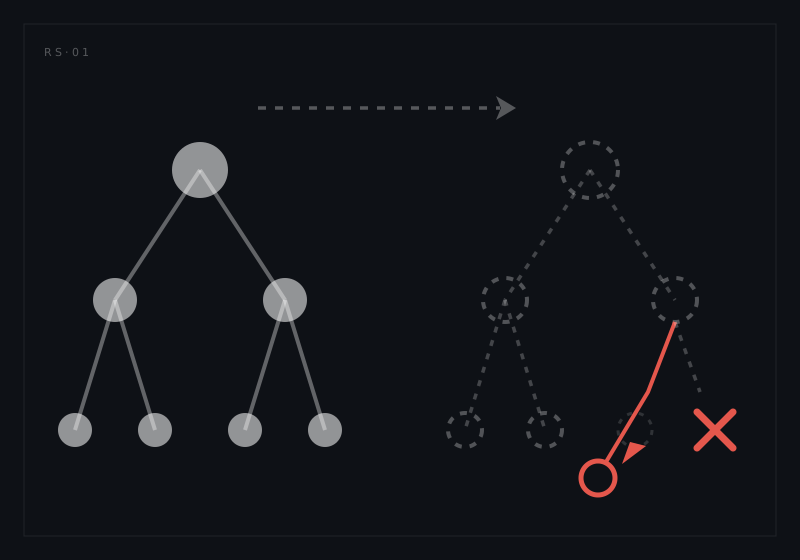
The private-copy trap
The pattern is always the same. At programme start, someone exports the BOM and builds the analysis structure from it. For a few weeks, the copy is faithful. Then the design starts moving: an ECO swaps a connector family, a supplier change re-sources a board, effectivity splits the fleet into two configurations, and the copy begins to lie.
The insidious part is that nothing announces the divergence. The prediction still computes. The FMECA still ranks. The numbers are simply about a product that no longer exists. Discovering how far the copy has drifted becomes a project of its own, usually scheduled, involuntarily, the month before a design review.
Three specific failure modes recur:
- Silent obsolescence. Analyses reference parts that engineering already replaced. The failure rates are real numbers about the wrong hardware.
- Effectivity blindness. The fleet has configurations; the private copy has one structure. Which serial numbers does that MTBF actually describe? Nobody can say precisely.
- The reconciliation tax. A senior engineer periodically re-exports, diffs, and patches the analysis structure by hand. This is skilled labour spent producing zero new engineering knowledge, pure friction against the enterprise systems' rate of change.
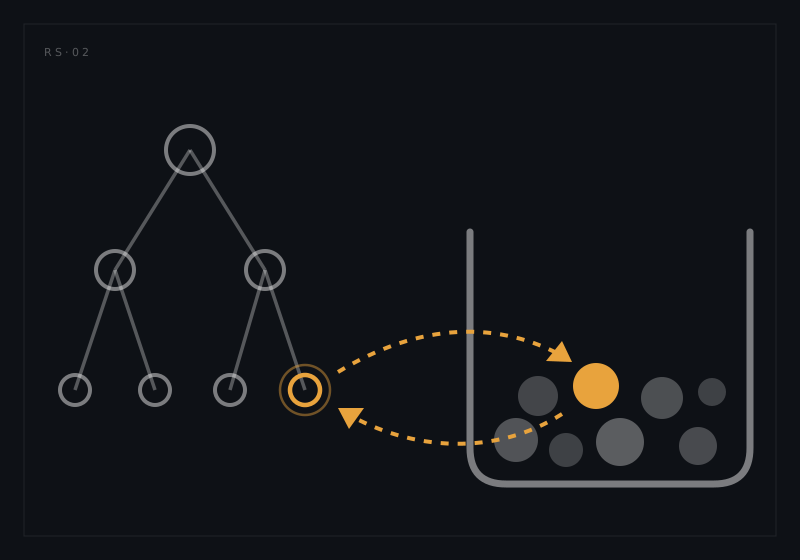
What the ERP side adds
PLM integration gets the structure right; ERP integration gets the parts right. The distinction matters more than it first appears:
- Approved parts and their sources. Reliability prediction is sensitive to manufacturer and quality level. The ERP knows which manufacturer part numbers are actually being bought, including the alternates that procurement qualified after the design froze.
- The as-built divergence. What engineering designed and what manufacturing installed are related but not identical. Fielded-reliability work (FRACAS, warranty analysis, fleet statistics) needs the as-built truth, and that truth is an ERP record.
- Commercial leverage. When the reliability analysis can price a failure (spares consumption, repair turnaround, warranty exposure), it starts speaking the language the rest of the organisation budgets in. Those figures live on the ERP side of the house.
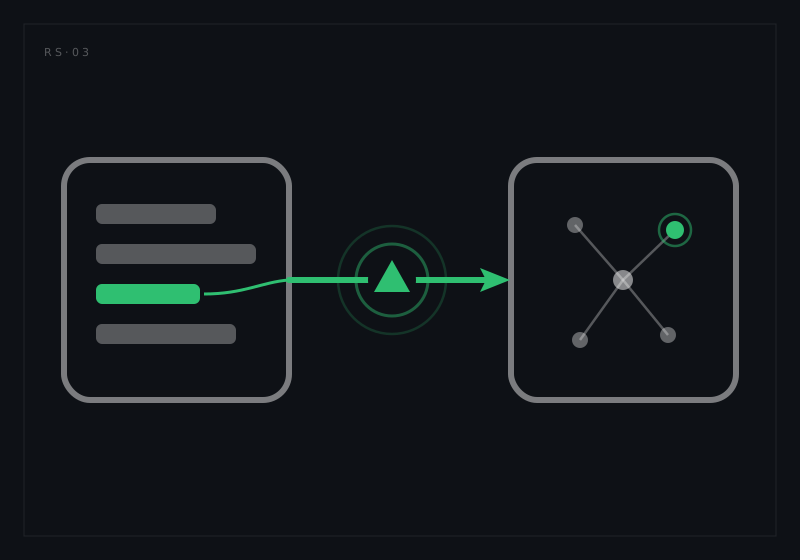
What good integration actually looks like
"Integration" has a bad reputation because it usually means a brittle point-to-point script someone wrote and left. The version that works is duller and stronger:
- Pull over REST, on identifiers. The RAMS platform reads BOM structures and part master data over the PLM/ERP systems' own APIs, keyed on stable identifiers, not on exported spreadsheets keyed on hope.
- Delta-aware, not snapshot-based. The integration knows what changed between baselines, so a design change arrives as a reviewable diff (these ten items changed, these three analyses reference them) rather than as a fresh export to re-reconcile from scratch.
- Change events trigger review, not panic. An ECO that touches analysed hardware should raise a flag inside the RAMS environment the day it is approved. The analyses affected are known, because the references are live.
- One direction of truth. The enterprise systems own product data; the RAMS platform owns analysis data. Integration means each side reads the other's truth, not that either side maintains a copy.
This is exactly how RAMSynapse treats the problem: enterprise systems feed the shared system model directly (structures, parts and requirements arrive over REST instead of being retyped), and every analysis references that one model. When the BOM moves, the analyses that care find out.
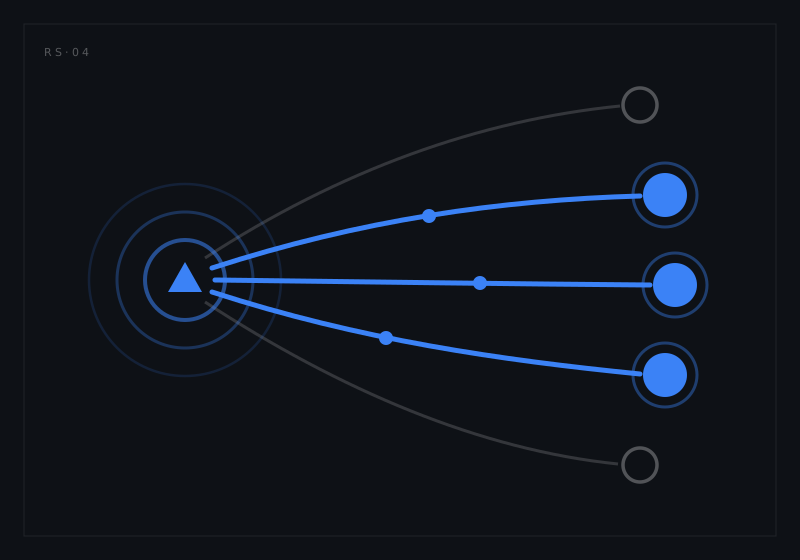
The payoff, stated plainly
Connect the RAMS toolchain to PLM and ERP and three things change character:
- The safety case tracks the design instead of trailing it. Reviews argue about engineering, not about which BOM revision the fault tree believes in.
- Change impact becomes a query instead of an investigation. "What does this ECO disturb?" has an answer in minutes, with the affected analyses listed.
- Reliability engineering rejoins the enterprise. The discipline stops being an island that receives exports and starts being a consumer and producer inside the same digital thread as everyone else.
The BOM is the spine. Analyses that hold a copy of the spine are analyses of a memory. Integration is simply the decision to analyse the product you are actually building.
We map PLM/ERP integrations during every walkthrough; bring your landscape and we'll talk specifics.