

Every number a RAMS analysis proves something against started life as a requirement. The system MTBF, the tolerable hazard rate on a function, the safety goal an architecture must honour: these are rows in a requirements-management or ALM tool long before they are targets in an allocation or top events in a fault tree.
Which raises the awkward question most programmes answer with a spreadsheet: how does the requirement in DOORS know what the fault tree concluded?
The two traces that matter
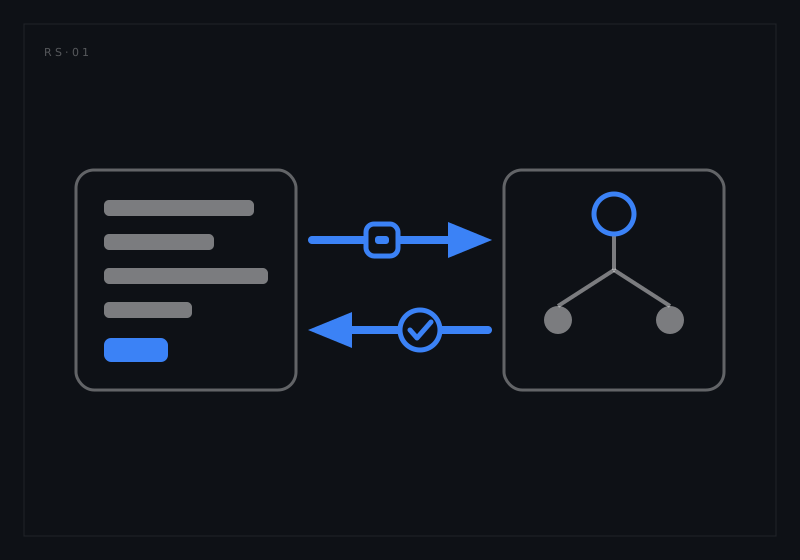
Requirements integration in RAMS is really two traces, running in opposite directions, and a programme needs both.
Downstream: requirements drive analyses. A quantitative safety requirement is not background reading; it is an input parameter. The tolerable hazard rate from the requirements set is the acceptance threshold the fault tree quantifies against. The reliability target in the contract is the number allocation decomposes. When those values are retyped into the RAMS tool, the programme now has two authorities for the same number, and they will diverge: requirements get renegotiated, derived, split into fleet variants. An analysis pointed at a stale target is proving compliance with a requirement that no longer exists.
Upstream: analyses verify requirements. This is the trace auditors actually walk. The requirement says the hazard shall be less probable than some threshold; the evidence is a specific quantification of a specific fault tree against a specific design baseline. In a disconnected toolchain, that connection exists as a compliance matrix assembled by hand, a document that describes the trace rather than being it, correct on the day of assembly and unverifiable the day after.
Hazards are requirement factories
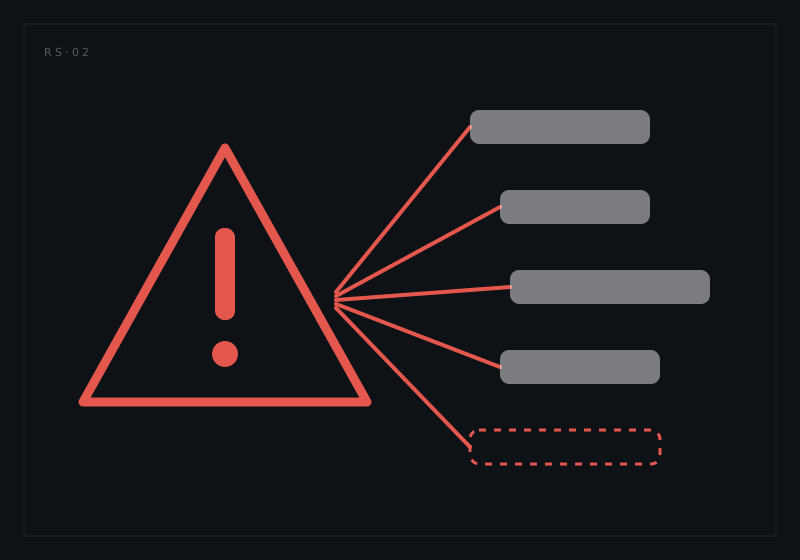
The link runs deeper than target-passing. The safety analyses generate requirements: an FHA that classifies a hazardous function produces derived safety requirements; a fault tree that depends on an independence claim produces design constraints; an FMECA that credits a compensating provision produces a requirement that the provision exist and be verified.
On disconnected programmes these derived requirements travel by email and meeting minutes, and a certification review eventually asks the question nobody can answer cleanly: show me every requirement this hazard produced, and the closure status of each. With a live link into the ALM tool, that answer is a query. Without one, it is a week.
ReqIF and the practical mechanics
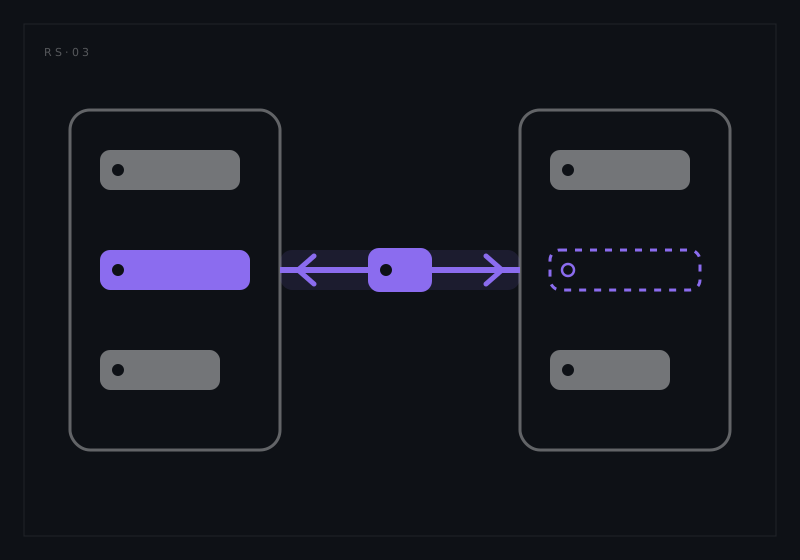
The requirements world solved its own exchange problem years ago: ReqIF is the standards-based interchange the serious tools (IBM DOORS, PTC Codebeamer, Jama Connect and their peers) all speak, and it carries what matters: identifiers, attributes, types, and crucially links. A workable RAMS-to-ALM integration looks like:
- Stable identity. The requirement's ID from the ALM tool is the key everywhere. The RAMS platform references it; it never re-numbers or forks it.
- Attributes, not prose scraping. Quantitative targets arrive as typed attributes (value, unit, applicability), so a tolerable hazard rate lands as a number the fault tree can consume, not as a sentence someone has to re-read.
- Round-trip status. Verification results flow back: this requirement's evidence is that analysis, at this baseline, with this outcome. The compliance matrix stops being a deliverable someone assembles and becomes a view someone opens.
- Baseline awareness. Requirements sets are versioned; analyses reference the version they verified against. When the requirement moves, the analyses that verified the old text raise their hands.
This is the shape of the Requirements tools integration in RAMSynapse: requirement sets arrive over ReqIF-capable interfaces and REST, land as referenced objects in the shared system model, and the analyses that consume or verify them hold live links, the same registry discipline the platform applies to every other value.
What changes when the trace is live
- Compliance reporting collapses from weeks to minutes. The requirement-to-evidence matrix is generated from actual references, not reconstructed from memory and email.
- Renegotiated targets propagate. When the customer relaxes or tightens a reliability requirement, the allocation and every downstream analysis see the change the day it lands, with the disturbance flagged.
- Derived safety requirements stop leaking. Hazard-generated requirements enter the ALM tool with their parentage intact, and their closure is trackable from either end.
- Audits change tone. The auditor who asks "how do you know this analysis matches this requirement version" gets shown a reference, not assured of a process.
Requirements management and RAMS grew up as separate disciplines with separate tools, and the seam between them became a manual labour market. The seam is exactly where the safety case lives. Close it, and the words in the requirements tool and the numbers in the analyses finally become what they always claimed to be: one argument.
Running DOORS, Codebeamer or Jama? Request a walkthrough and we'll trace a requirement end to end.