

The same fleet as the task analysis module: 36 medium transport aircraft, 600 flight hours each per year, two environmental control system packs per aircraft, three main operating bases and one depot, supported for fifteen years. Money is discounted at 7 per cent, which over fifteen years gives a capital recovery factor of 0.1098. Every value is an illustrative teaching figure.
The support structure is the ordinary three-level one. O level is the flight line at each of the three bases, which removes and replaces items and does nothing else to them. I level is one workshop per base, three in total. D level is a single depot. Seven items are candidates, and for each one the question is the same: discard it on failure, repair it at I level, or repair it at D level. Nothing in this system is repaired at O level, which is the normal position for line-replaceable items and is a decision the maintenance concept made before the analysis started.
Step one, the constraints
Four of the seven carry a constraint that is recorded before any cost is computed:
| Item | Constraint | Effect |
|---|---|---|
| Air cycle machine | Rotor balancing and a containment test are required after any bearing change | Depot only |
| Pack control unit | The software load and calibration tool is controlled | Depot only |
| Flow control valve | Flight-safety item: release after overhaul needs an approved test bench | Depot only |
| Ozone converter | Spent catalyst is a controlled waste | Disposal routed through the depot |
Recording these first is not bureaucracy. It stops the analysis producing a cheapest answer that the support policy will refuse, and it makes the price of each constraint visible, which is the point of the last section of this chapter.
Step two, the money
For each surviving option, the annual cost of owning the capability, not the cost of a repair. That distinction is the whole method:
| Element | Discard | Repair at I level | Repair at D level |
|---|---|---|---|
| Replacement units bought | demand × unit price | none | none |
| Repair labour and materials | none | demand × (materials + shop hours × rate) | same, at the depot rate |
| Transport | none | none | demand × two-way freight |
| Pipeline spares | procurement lead time | short turnaround, small pipeline | long turnaround, larger pipeline |
| Test equipment | none | one set per base, times three | one set |
| Calibration and support | none | per site, every year | one site |
| Training | none | per site | one site |
| Technical data | none | a repair manual per level | a repair manual per level |
The pipeline term follows from the turnaround: an item away for repair has to be replaced on the aircraft by one from stock, so pipeline units ≈ demand × turnaround ÷ 365, plus a safety level. A workshop with a seven-day turnaround needs about a fifth of the stock a depot with a thirty-six-day round trip does, which is the one place where the base workshop wins on money.
The answers
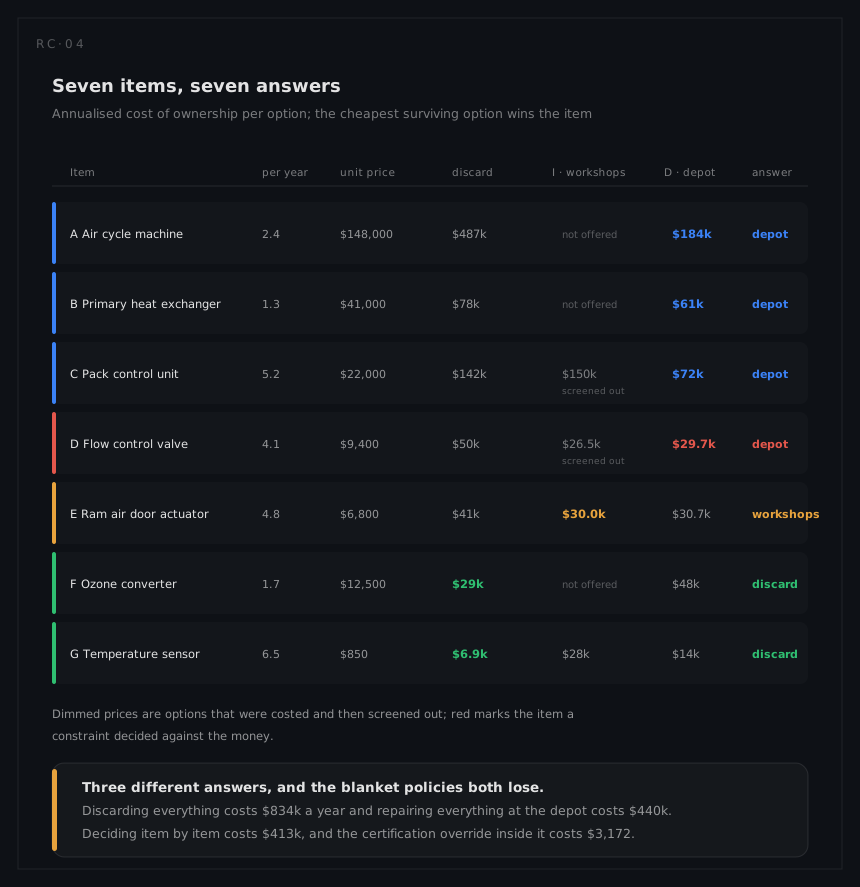
| Item | Removals a year | Unit price | Discard | I level | D level | Answer |
|---|---|---|---|---|---|---|
| Air cycle machine | 2.4 | $148,000 | $487k | not offered | $184k | D |
| Primary heat exchanger | 1.3 | $41,000 | $78k | not offered | $61k | D |
| Pack control unit | 5.2 | $22,000 | $142k | $150k, screened out | $72k | D |
| Flow control valve | 4.1 | $9,400 | $50k | $26.5k, screened out | $29.7k | D, by constraint |
| Ram air door actuator | 4.8 | $6,800 | $41k | $30.0k | $30.7k | I |
| Ozone converter | 1.7 | $12,500 | $29k | not offered | $48k | discard |
| Temperature sensor | 6.5 | $850 | $6.9k | $28k | $14k | discard |
The two markers in the workshop column mean different things, and the difference matters later. Not offered means no intermediate-level option was ever built: the work, or the waste it leaves behind, needs a rig, a facility or a release authority that no base workshop is going to hold, so there was nothing to cost. Two of the four constraints in step one are of that kind, and neither of them can be given a price. Screened out means an option a workshop could realistically have held was costed anyway and then removed by one of the other two constraints, which is the only way the price of a constraint can be stated at the end of the chapter.
Three of those rows are worth reading closely.
The temperature sensor is not a close call. Repairing an $850 item at the depot costs $14,000 a year against $6,900 to throw it away, and repairing it at three workshops costs $28,000. The item is not the point: the test equipment, the training and the manual are, and they cost the same whether the item is worth $850 or $85,000.
The ram air door actuator is a two per cent decision. $30,000 against $30,700 is not a result, it is a coin toss dressed as arithmetic. The honest report says the two options are indistinguishable at this fleet size and recommends the one that is easier to reverse, which is usually the depot, because a capability at one site can be extended to three later and three sites cannot be un-bought.
The pack control unit is the case for the depot twice over. The controlled software load and calibration tool removes the workshop option before any cost is computed, and the workshop option was the most expensive of the three anyway: triplicating a $240,000 tester to handle five removals a year is exactly the mistake a level of repair analysis exists to prevent. When the constraint and the arithmetic agree, the constraint costs nothing, and that is worth reporting too.
Where the money goes
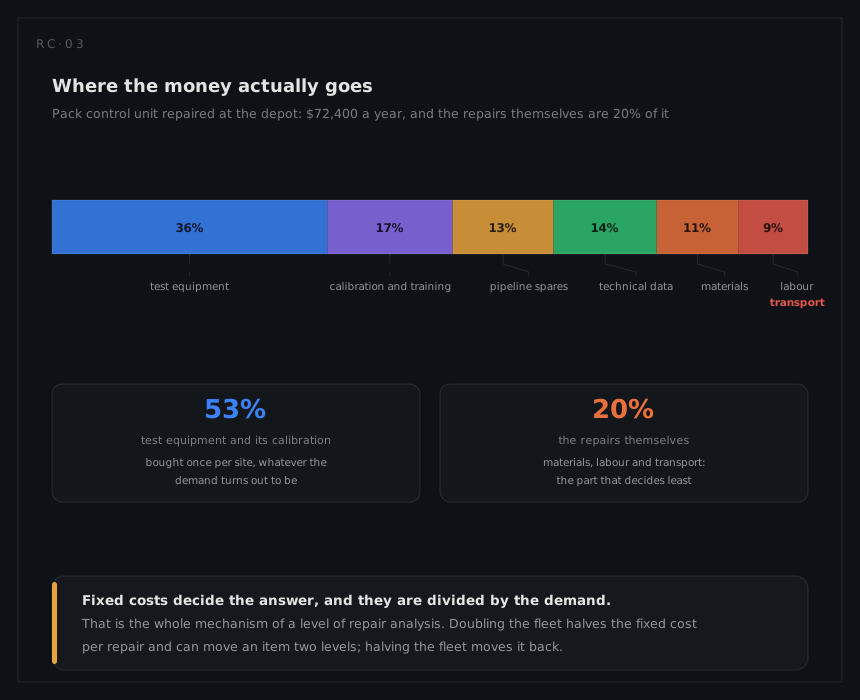
Every line comes from a stated input and the capital recovery factor at the top of this page, so the column can be re-derived rather than believed. One-off purchases are annualised by multiplying by CRF = 0.1098; the recurring lines are already annual.
| Element | Where it comes from | Per year | Share |
|---|---|---|---|
| Test equipment, annualised | one depot set at $240,000 × 0.1098 | $26,352 | 36% |
| Calibration, training and support | recurring, at the one depot site | $12,000 | 17% |
| Technical data | a manual at O and at D, $45,000 each, × 0.1098 | $9,882 | 14% |
| Pipeline spares | 4 units × $22,000 × 0.1098 | $9,662 | 13% |
| Materials | 5.2 repairs × $1,500 of parts | $7,800 | 11% |
| Labour and transport | 5.2 repairs × $1,285 | $6,682 | 9% |
| $72,378 |
The pipeline count is the one line worth showing in full, because it is where the rule stated above meets a real number: 5.2 × 36 ⁄ 365 = 0.51 units are in transit or on the bench on an average day, which rounds up to one, and each of the three bases holds a safety spare so an aircraft is not grounded while its unit is away. Four units, not the eight that an unexamined depot means lots of stock instinct would buy. On this item the pipeline is the smallest of the four capability lines, which is the opposite of what the long depot turnaround suggests, and the reason is simply that 5.2 removals a year is not many.
Four dollars in five buy the capability, not the repairs. That is why a level of repair analysis is a procurement decision rather than an engineering one, and why arguing about shop labour rates is almost always arguing about the wrong number.
Where the boundaries are
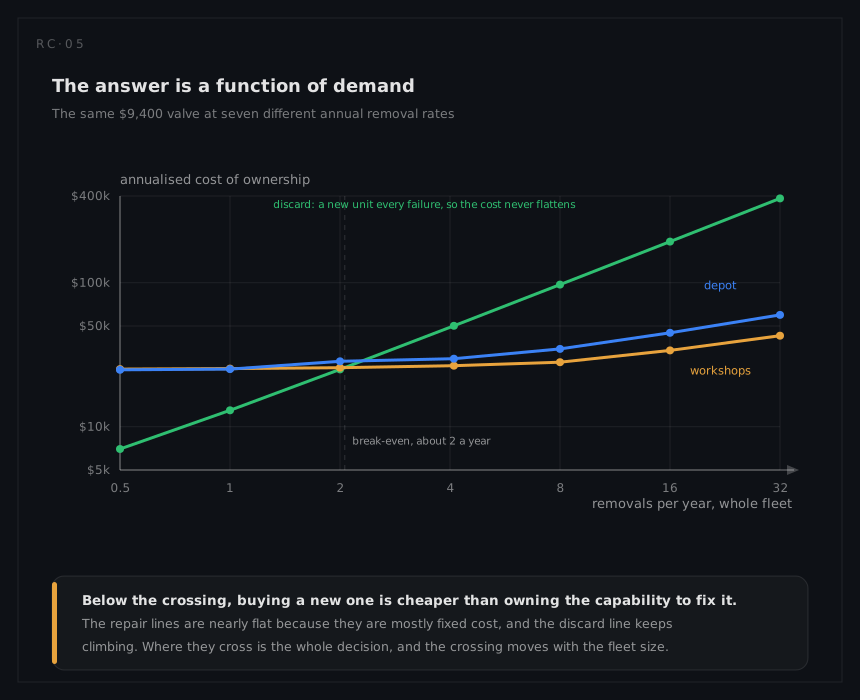
For the flow control valve, holding everything else fixed:
| Removals a year | Discard | Workshops | Depot | Cheapest |
|---|---|---|---|---|
| 0.5 | $7.0k | $25.1k | $24.8k | discard |
| 2 | $25.0k | $25.7k | $28.4k | discard |
| 4.1, this fleet | $50.2k | $26.5k | $29.7k | workshops |
| 8 | $97.0k | $28.0k | $34.7k | workshops |
| 32 | $385.0k | $42.8k | $59.7k | workshops |
The discard column is not demand times the unit price, and it is worth saying why before the numbers are read as one. Every removal buys a $9,400 valve and then pays the freight in, the disposal of the one it replaced and the stock the ninety-day procurement lead time forces the fleet to carry, which comes to about $12,000 for each removal a year. Under all of that sits one safety spare, about $1,000 a year, and that is the only part of the discard option that does not move with demand.
The break-even is about two removals a year. Below it, buying a new valve is cheaper than owning the ability to fix one. A fleet a quarter of this size would discard the same item, with the same engineering, at the same price.
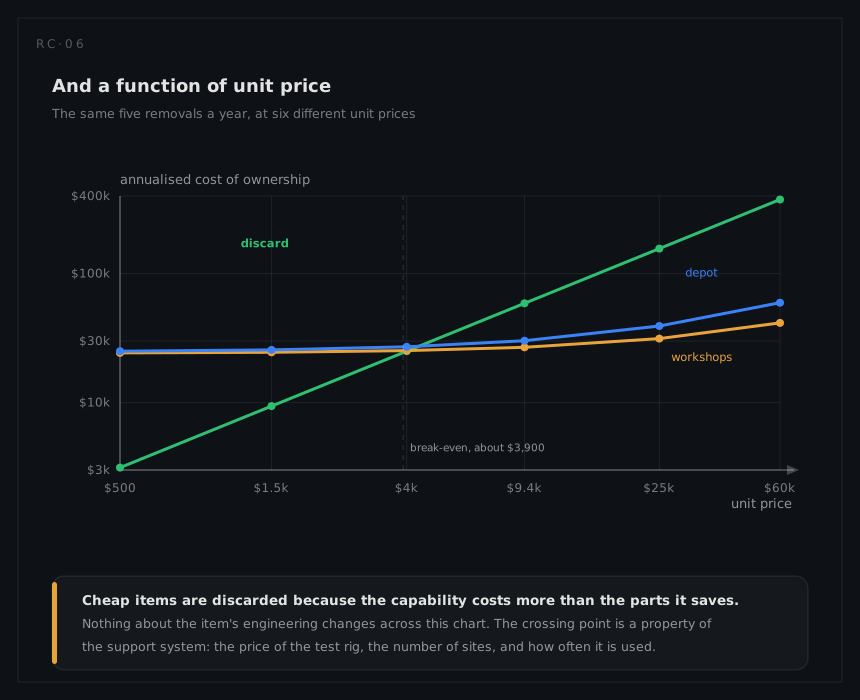
Holding demand at five a year and sweeping the unit price gives a crossing near $3,900: below it discard, above it repair. Both boundaries move with the number of sites, the price of the tester and the length of the pipeline, which is why the answer belongs to a fleet and a support concept rather than to a part number.
What the constraints cost
Three items were sent to the depot by a constraint rather than by the arithmetic, and only one of the three has a price. The pack control unit's workshop option was costed before it was screened out and was the most expensive of the three, so that constraint agreed with the economics and cost nothing. The air cycle machine never had a workshop option to cost, so its constraint cannot be priced at all, and saying so is more honest than reporting it as free. For the flow control valve the constraint had a price:
$29,672 at the depot − $26,500 at the workshops = $3,172 a year
That is the price of the certification constraint, and stating it is more useful than complaining about it: $3,172 a year, or about $29,000 over the support life, is what an approval programme for the base workshops would have to beat. A constraint that is recorded but never costed is a decision nobody can revisit.
Item by item against a blanket policy
| Policy | Annual cost |
|---|---|
| Discard everything | $834k |
| Repair everything at the depot | $440k |
| Decide item by item | $413k |
The item-by-item answer beats the better blanket policy by six per cent, and it beats the worse one by half. The six per cent is the usual size of this prize: the large saving comes from not doing the obviously wrong thing to the expensive items, and the analysis earns the rest of its keep by finding the two or three items where intuition is wrong.
One level down
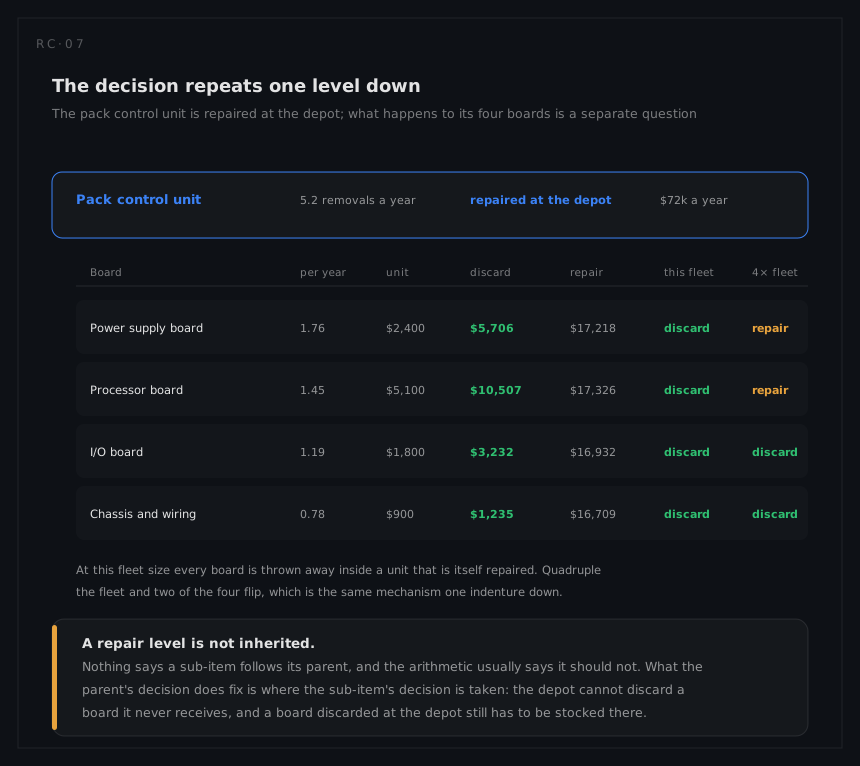
| Board | Demand a year | Unit price | Discard | Repair | This fleet | Four times the fleet |
|---|---|---|---|---|---|---|
| Power supply board | 1.76 | $2,400 | $5.7k | $17.2k | discard | repair |
| Processor board | 1.45 | $5,100 | $10.5k | $17.3k | discard | repair |
| I/O board | 1.19 | $1,800 | $3.2k | $16.9k | discard | discard |
| Chassis and wiring | 0.78 | $900 | $1.2k | $16.7k | discard | discard |
A repair level is not inherited. The unit is repaired and its contents are discarded, which sounds contradictory and is the normal answer: the depot's repair of the unit is the replacement of a board. What the parent's decision fixes is where the sub-item decision happens, and what the sub-item decision fixes is what the depot has to stock.
What the answer commits the programme to
| Decision | Consequence |
|---|---|
| Four items repaired at the depot | One tester of each type, one training pipeline, four repair manuals |
| One item repaired at the base workshops | Three sets of a modest rig, three trained teams, one manual, a short pipeline |
| Two items discarded | No capability at all, and a procurement contract with a 90-day lead time |
| Four boards discarded at the depot | Depot stock for four board types, and a disposal route |
Every line is a commitment made years before the first repair and expensive to reverse. That is the reason to redo the analysis when the fleet size, the usage, the prices or the observed failure rates move, and the reason nobody enjoys doing it.