

Every other analysis in this knowledgebase takes a failure rate as given and reasons about what to do with it. A prediction computes it, an RBD arranges it, an FMECA divides it into modes. Derating is the one that changes it. A part run at half its rated voltage and forty degrees cooler is a different part statistically, and the decision costs nothing but a part number and some copper if it is taken early enough.
The rule is one sentence: no part may operate above a stated fraction of its rating, at the temperature it actually reaches. Two clauses, and both are load-bearing. The first is the stress ratio, applied divided by rated, per stress type: voltage, current, power, fan-out, contact load. The second is temperature, which is not a stress ratio at all and which no schematic can tell you.
What a derating curve is
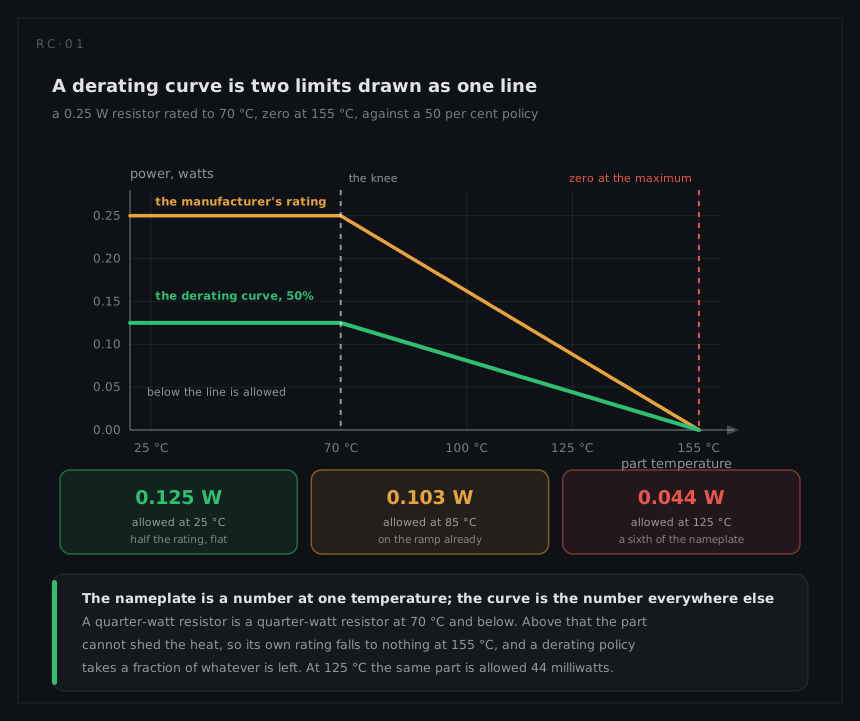
A datasheet's headline number holds at one temperature. Above the part's reference temperature it cannot shed the heat it makes, so the manufacturer's own rating falls, usually linearly, to zero at the part's maximum. That falling line is the rating curve, and it belongs to the part.
The derating curve is the programme's line underneath it: the rating curve multiplied by a policy factor, and then cut off at a maximum temperature the policy sets, which is normally below the one the part could survive. Everything below the derating curve is allowed; everything above it is a violation whether or not the part is technically within its rating. The gap between the two lines is the margin the programme bought.
Five rule sets, and why the policy has to name one
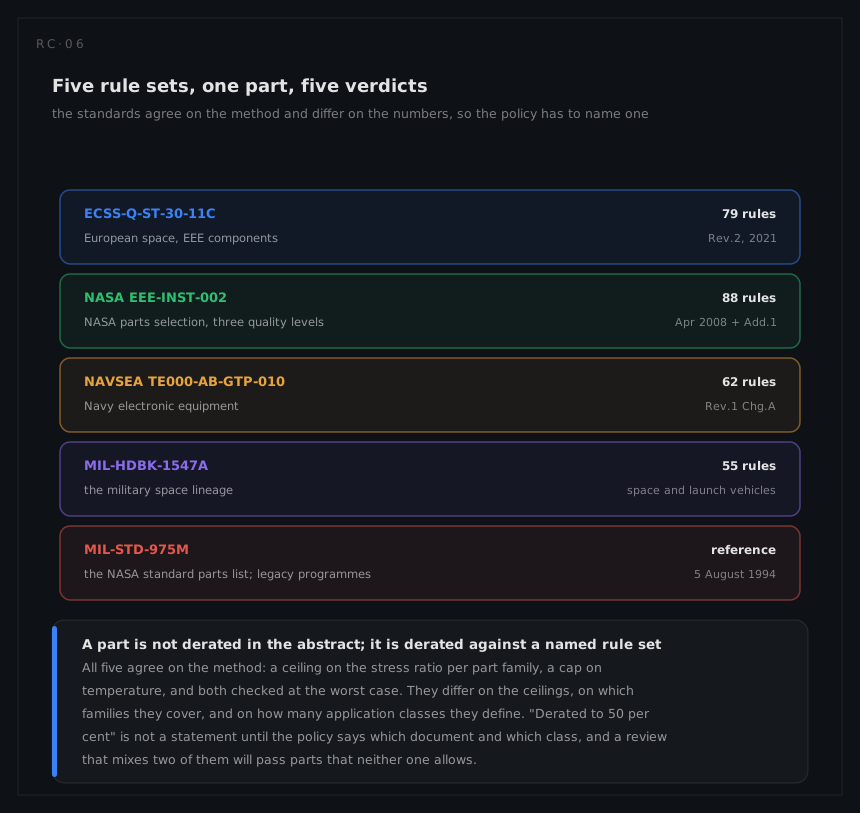
| Standard | Scope |
|---|---|
| ECSS-Q-ST-30-11C Rev.2 (2021) | European space: derating requirements for EEE components |
| NASA EEE-INST-002 (May 2003 + Add.1 of 2008) | NASA parts selection, screening, qualification and derating, across three part quality levels |
| NAVSEA TE000-AB-GTP-010 Rev.1 | Parts derating requirements for Navy electronic equipment |
| MIL-HDBK-1547A | Electronic parts, materials and processes for space and launch vehicles |
| MIL-STD-975M (5 Aug 1994) | The NASA standard EEE parts list, whose derating appendix is still called up on legacy programmes |
All five share a structure: a ceiling on the stress ratio per part family, a cap on junction or hot-spot temperature, and the requirement that both are met at the worst case rather than at nominal. They differ on the ceilings themselves, on which families they enumerate, and on how they grade applications. "Derated to 50 per cent" is not a statement until it names a document and a class, and a review that mixes two of them will pass parts that neither one allows.
Where it sits in the programme
It starts as soon as there is a parts list and a power budget, which is earlier than most reliability work, and it is at its cheapest there: changing a capacitor's voltage rating on a schematic costs nothing, and changing it after qualification costs a requalification. It never quite finishes, because the operating point moves whenever the thermal design, the duty cycle or the environment does.
| Programme stage | What derating is doing |
|---|---|
| Concept and preliminary design | Choosing part ratings with headroom, before the layout fixes the thermal picture |
| Detailed design | The full check against the rule set, with real dissipations and a thermal model |
| Verification | Evidence: the derating report is a deliverable on most space and defence programmes |
| Change control | Re-run on every change that moves a dissipation, an ambient or a duty cycle |
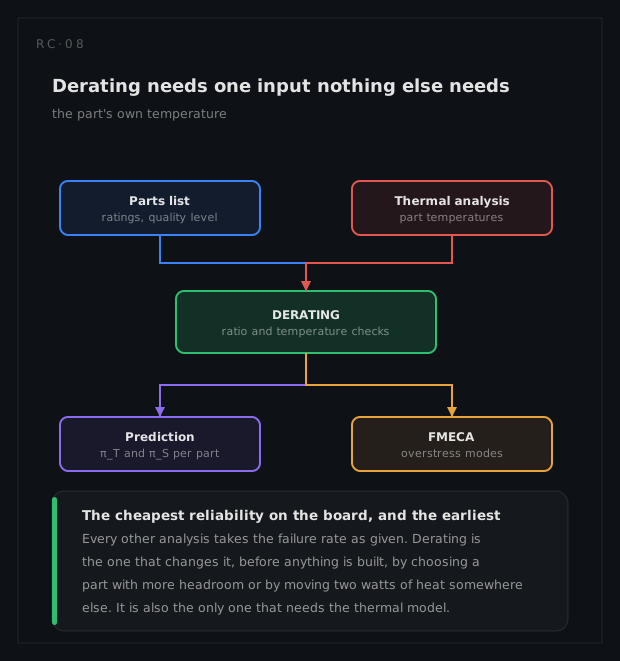
Its neighbours are few and specific. The thermal analysis supplies the temperature of every part, and without it a derating report is a table of ratios that has answered half the question. The prediction consumes the result twice over, through its temperature factor and its stress factor. The FMECA inherits the overstress modes that a violation makes credible.